Tag: pressure washing

  • Can You Pressure Wash Tarmac

    Can You Pressure Wash Tarmac

    Pressure washing your patio can deliver amazing results, restore its appearance, create a safer environment, and improve your outdoor space.

    But what if your driveway isn’t made of patio slabs? What happens when you want to pressure wash a completely different surface?

    In this article, we’ll explore whether it’s possible, safe, and advisable to pressure wash a tarmac surface.

    Lets begin.

    Understanding Tarmac Composition

    Before we dive into the details, its important to understand the composition of tarmac. Tarmac consists primarily of a mixture of aggregates, like crushed stone or gravel, bound together with bitumen.

    The crushed stones give the tarmac its strengths for heavy loads, whilst the bitumen agent serves as a waterproofing agent. This waterproofing prevents water infiltration that can lead to cracks and deterioration.

    can you pressure wash tarmac pie chart

    This being said, exposure to UV rays and harsh elements can overtime degrade this protective layer, making regular maintenance imperative. Regular pressure washing services can help preserve the integrity of the tarmac surface.

    When working with any tarmac surface, pay particular attention to its color and condition as any changes can indicate underlying issues. For instance, if the surface becomes brittle or begins to fade, it might need repairs and a sealant application.

    Benefits of Pressure Washing

    One of the main benefits of pressure washing is its ability to remove dirt, grime, and stains that accumulate over time. This not only improves the appearance of your tarmac but also prevents deterioration that could require costly repairs later down the line.

    Regular maintenance through pressure washing can also prevent damage from harmful elements, extending the lifespan of your tarmac.

    Another key advantage is the efficiency of pressure washing. With high-pressure water jets, you can clean large areas quickly, saving you time and effort compared to traditional cleaning methods.

    Here’s a quick overview of the benefits:

    Benefit Description Impact
    Aesthetic Improvement Restores the original look of tarmac Increases property value
    Time Efficiency Cleans large areas quickly Saves labor costs
    Safety Improvement Removes slippery substances Reduces accident risks

    Risks of Pressure Washing Tarmac

    While pressure washing can be a great way to clean surfaces, using it on tarmac does come with risks. Tarmac is a softer material than concrete or paving slabs, making it more vulnerable to damage from high-pressure water. Too much force can loosen stones, break the surface, or even cause cracks.

    Another risk is water infiltration. If there are any weak spots or cracks, high-pressure water can seep in, weakening the base and leading to further damage over time. This can result in potholes or uneven surfaces, especially in older tarmac.

    Using the wrong nozzle or pressure setting can also strip away the top layer of the tarmac, leaving it rough and more likely to wear down faster. This not only affects its appearance but can also make it more prone to further damage from weather and everyday use.

    To avoid these risks, it’s important to use low pressure, the right cleaning technique, and a gentle detergent and consult with professional cleaning operators if you are unsure as they will be able to provide expert guidance on safe practices.

    Steps to Safe Pressure Washing Techniques

    Now that you understand the composition of tarmac plus the benefits and risks, it’s important to employ safe techniques to protect both the surface and yourself whilst carrying out the clean.

    Safe & Effective Tarmac Cleaning! Book Your Free Estimate Now

    Here are some key steps to perform a safe, effective clean:

    Wear Protective Gear

    Always wear safety goggles, gloves, and sturdy footwear to protect yourself from debris and any chemical cleaners you might use.

    Choose the Right Pressure Setting

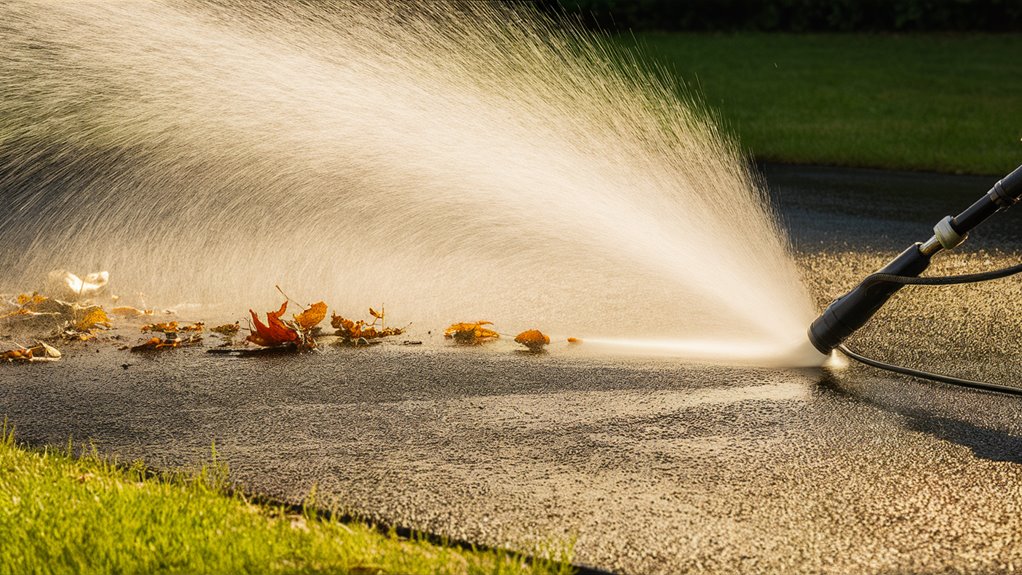
    Use a lower pressure setting, typically around 1500-2000 PSI, to avoid damaging the tarmac. Higher pressures can cause cracks and surface degradation.

    Use a Fan Spray Nozzle

    Opt for a fan spray nozzle instead of a narrow jet. This spreads the pressure evenly and prevents concentrated force on a single spot.

    Maintain a Safe Distance

    Keep the nozzle at least 12 inches away from the tarmac surface. This distance helps reduce the risk of damaging the material while still effectively cleaning.

    Rinse and Allow to Dry

    After washing, rinse thoroughly and let the tarmac dry completely to assess the results and ensure no damage has occurred.

    Alternative Cleaning Methods

    If you are looking for other ways to clean your tarmac without relying on pressure washing, there are several alternatives.

    One way is using a broom or stiff brush with soapy water. This allows you to scrub away dirt and grime without damaging the surface. Mix a mild detergent with warm water, apply it to the tarmac, and then scrub vigorously.

    Another is using a leaf blower. This is quick and can help prevent dirt build-up before it becomes a bigger issue. For tougher stains consider using a degreaser specifically designed for tarmac, apply it directly to the stain, let it sit for a while, and then scrub it away.

    If you prefer a more natural solution, vinegar and baking soda can work wonders. Sprinkle baking soda on the stain, spray vinegar over it, let it fizz, and then scrub the area clean.

    Maintenance Tips for Tarmac

    By following a few simple steps, you can extend your tarmac lifespan and maintain its appearance. Here’s a few maintenance tips you can follow:

    1. Regular Cleaning: Sweep away debris, leaves, and dirt regularly. This prevents stains and keeps your tarmac looking fresh.
    2. Inspect for Damage: Check for cracks or potholes. Addressing these issues early can prevent further deterioration and costly repairs later.
    3. Sealcoat Application: Apply a sealcoat every couple of years. This protective layer improves durability and shields against oil spills and UV damage.
    4. Avoid Heavy Loads: Keep heavy vehicles off your tarmac when possible. Excess weight can lead to ruts and cracks, compromising its integrity.

    Conclusion

    So yes, in effect you can pressure wash tarmac, but it’s important you follow some simple rules.

    Stick to lower pressure settings, use a fan spray nozzle to protect the surface, remember to maintain a safe distance, and wear protective gear.

    By following these tips, you can keep your tarmac looking great and dramatically extend its lifespan.

    How We Can Help: If your tarmac driveway or surface needs a deep clean, we offer professional pressure washing services to remove dirt, moss, and stains. Our expert team ensure a safe and effective clean without causing damage. Contact us today on 07899 581 999 or send us a message to book your service and restore your tarmac’s appearance.

    We offer pressure washing services throughout BurnleySkiptonClitheroeColne and surrounding areas

  • Can you Pressure Wash a Patio in the Rain

    Can you Pressure Wash a Patio in the Rain

    Here in the UK, the weather can be quite unpredictable to say the least, often raining and interrupting our outdoor cleaning plans. The question often comes up: can you pressure wash a patio in the rain?

    While it’s possible, there are important things to think about before you start.

    Pressure washing a patio in the rain can be tricky. The rain can make the cleaning solution less effective and the surface slippery. This could be dangerous for the person washing the patio.

    Even with these challenges, washing a patio in the rain might work if the rain is light and not too heavy. It’s important to be careful. Wear shoes that won’t slip and adjust the washer’s pressure to protect the patio.

    Whether or not to wash your patio in the rain depends on the situation, the patio’s condition, and how comfortable you are with the task.

    Don’t Risk Slippy Surfaces! Get a Free Pressure Washing Quote Today.
    Get Your Free Quote Now

    You may also like: Pressure washing block paving

    Tips on using a Pressure Washer in the Rain

    Pressure washing a patio in the rain might seem odd, but it can work. The rain adds a challenge, but with the right methods, your patio can shine. Here are some tips to help you clean your patio even when it’s wet.

    Tweak your pressure washer’s settings for the wet weather. Lower the water pressure a bit since the rain already adds moisture. Also, choose a wider nozzle to spread the cleaning solution evenly and avoid splashing.

    • Reduce water pressure to account for rain
    • Use a wider nozzle to prevent excessive splashing
    • Apply a suitable cleaning solution to help cut through grime
    • Think about the cleaning solution you’re using too. Pick one made for wet conditions to tackle tough dirt and moss.
    • Always follow the instructions from the manufacturer for the best results.

    Pressure washing your patio in the rain takes a bit more work, but it’s doable. With the right settings and products, you can keep your outdoor space clean. This way, you can enjoy a spotless patio even on rainy days.

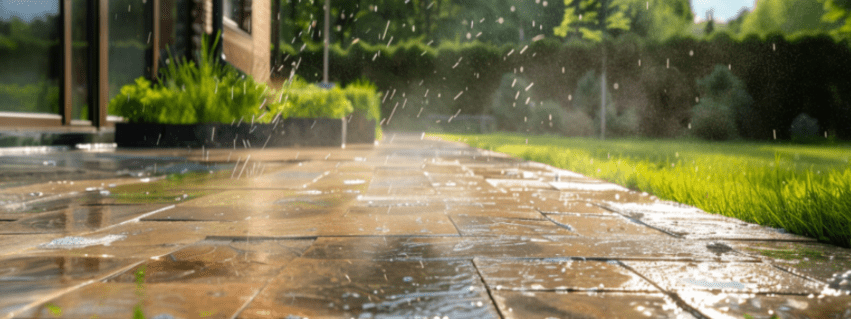
    patio after pressure washing in the rain

    Alternative Methods for Cleaning Patios in Rainy Weather

    When it’s raining, a pressure washer might not be the best choice for cleaning your patio. But, there are other ways to keep your outdoor area clean, even when it’s wet.

    Using a scrub brush and mild detergent is a good option. It helps to remove dirt, grime, and moss gently. Make sure to rinse the patio well after cleaning to get rid of any soap.

    Another way is to sweep the patio with a broom and dustpan. This is great for getting rid of loose debris, leaves, and other dirt. It works well when the patio isn’t too wet yet.

    Need a Hand Cleaning Your Patio?
    Give us a Call on 07899 581999

    For tough stains or discoloration, try a special patio cleaner. These products are made to remove hard-to-clean grime and usually don’t need a lot of rinsing. Always follow the instructions from the manufacturer when using these cleaners.

    If you prefer a natural option, a mix of white vinegar and water can clean your patio. The vinegar’s acetic acid helps break down dirt and algae. The water dilutes it enough to be safe to use.

    It’s crucial to clean safely, no matter the method you pick. Wear the right shoes and take breaks to stay comfortable and safe.

    You may also like: Preparing your home for pressure washing

    Conclusion

    While it might not be best for you to pressure wash your patio when it’s raining, there are other ways to keep it clean. You can try hand-scrubbing or using a garden hose. The important thing is to pick the method that fits your needs and the weather.

    Deciding to pressure wash your patio in the rain depends on a few things. These include how bad the weather is, the state of your patio, and what you prefer. By looking at the good and bad points of each method, you can keep your patio clean and in good shape, even when it’s raining.

    Success in patio cleaning comes from being flexible and open to trying new things. By experimenting with different techniques, you can find the best way for your patio and your preferences.

    How we can help: Unsure? We can help can restore your surfaces to their former glory and let you enjoy a safe, clean, and inviting outdoor area, even in the rain! Contact us today on 07899 581 999 or send us a message to schedule an appointment and enjoy a peaceful mind knowing your exterior surfaces are in good hands.

    Come rain or shine, we offer professional pressure washing services throughout BurnleySkiptonClitheroe, & Colne